What Is the Medical Billing Cycle?
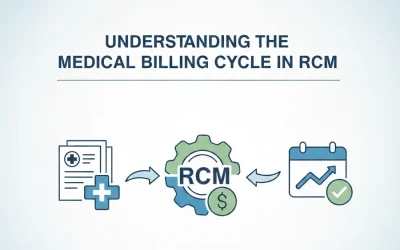
Without an efficient revenue cycle management (RCM), a health care organization may face financial loss. The medical billing cycle plays a major role in the collection of payments and maintaining financial health for medical practices. The medical billing process cycle starts with payment registration, and it ends with payment posting. It is an administrative workflow, and its main purpose is to ensure that healthcare providers receive payments for the services they deliver. The billing cycle plays a critical role in claim submission, payment posting, denial management, and accounts receivable (AR) follow-up
Let’s dive deeper by breaking the medical billing cycle into further steps for easy understanding.
Key Steps in the Medical Billing Cycle
1. Patient Registration
The revenue cycle begins with patient registration. This step includes:
- The front desk team collects the patient’s key details, like name, date of birth, and contact information.
- Then come the insurance details, including the policy number and the policy provider’s information.
The collected information must be entered accurately to save time and resources later on. Incorrect patient information may lead to a delay in payment posting or claim denial.
2. Insurance Verification
After the insurance information is collected, healthcare providers verify the patient’s insurance. Verification is done before any services are provided. Verification includes:
- Checking the coverage limit of insurance.
- Checking pre-authorization if needed.
3. Medical Coding & Charge Entry
After the services are provided to the patient, medical coders translate those procedures and diagnoses into standardized codes. Accurate coding is required for capturing the correct claim value and to avoid claim denials.
4. Claim Submission
Claims are reviewed before submission to ensure accuracy. Claims are submitted electronically for faster processing. Incorrect claims may lead to claim denials or rejections, which may affect an organization’s finances.
5. Payment Posting
Once the payer receives the claim, they cross-check the details and review the claim. The payer may approve or deny the payment according to their policy. The payer posts the adjustments to the patient account to ensure accurate financial records. Accurate payment processing steadies the revenue for healthcare providers.
6. Denial Management
If a claim is denied (or underpaid), the billing team reviews the reason, and if it finds any error, they are responsible for correcting those errors (e.g., coding, patient data, or missing authorization) and resubmit the claim. Considering denials a blind alley is not the correct approach.
Why the Medical Billing Cycle Matters
The medical billing cycle is important because:
- It reduces denials by identifying errors during the early stages.
- It speeds up the reimbursement, because accurate and clean claims have higher approval rates.
- It ensures fear delays and smooth cash flow for healthcare providers.
How the Billing Cycle Supports RCM
Prospect Health Care Solutions states that each stage of the billing cycle is a building block in RCM. Proper patient registration and insurance verification prevent errors and denials. Charge entry and claim submission ensure services are translated into accurate claims. All in all, a well-managed billing cycle supports the financial stability of the practice. Revenue cycle management ensures operational sustainability.
Conclusion
In conclusion, the medical billing cycle is important for a practice’s financial health. For any individual working in or managing revenue cycle management (RCM), mastering the billing cycle is foundational.
How many steps are in the billing cycle?
Essentially, there are 6-8 steps. Common stages include patient registration, insurance verification, coding/charge entry, claim submission, payment posting, and denial management.
How does the billing cycle improve RCM?
By ensuring data accuracy, the billing cycle reduces claim denials, improves operational efficiency, and supports reliable cash flow.
Is the billing cycle the same as revenue cycle management?
Billing cycle is a core component of Revenue cycle management. RCM is a broader aspect, while the billing cycle is the segment specifically focused on claims and billing.
Resources
- HFMA (Healthcare Financial Management Association)
- AAPC (American Academy of Professional Coders)
- AHIMA (American Health Information Management Association)
- RevCycleIntelligence

About the Author
Laim Will is a medical billing and coding content writer with 5 years of practical experience in Revenue Cycle Management (RCM). She specializes in beginner-friendly medical billing guides, denial management explanations, coding basics, and AR workflow insights.