Best Medical Billing Software for Small Practices: Top 7 Reviews for 2026

Written by Laim Will
Denial Journal Editors
Denial Journal Editors
📅 Updated: September 2026
⏱️ 7 min read
1. Introduction: The small practice challenge
Practitioners decide to become healthcare providers to care for patients, but reality hits them harder when they wrestle with claim denials and chase unpaid insurance claims, which is why many are turning to medical billing software for assistance. For independent practitioners, managing a healthcare business feels like running two jobs at a time, which is why many are turning to medical billing software for assistance. (e.g., providing care to the patient and also keeping an eye on the financial records).
Revenue cycle management (RCM) directly affects the ability of practitioners to stay in the business. Large healthcare systems have dedicated IT staff and billing experts; meanwhile, small practitioners need tools that deliver powerful results without a high price tag.
Small practitioners need RCM automation that’s affordable and is built to perform best for practices that have minimal IT support and that does not capture a major part of their earnings. An automation system with a complex interface is also not an option due to higher training time. During the selection of an automation system, three non-negotiable characteristics are :
Affordability & transparent pricing systems that do not have any hidden charges are mostly appreciated
Ease of Use & Minimal Training. For small practices, systems with a less complex interface are most in demand
Integrated EHR/Practice Management (PM) software with seamless integration, i.e., one platform that turns charting, medical billing process, and scheduling into a single workflow.
In this guide, we’re going to review the top 7 software in 2026, perfect for independent practitioners or small group practices. You will take a clear look at comparisons, pros and cons, and insights into tools that specialize in streamlining the workflow.
2. Quick Comparison Table:
This table is designed to compare key features, pricing, and performance of each software to make a well-informed decision according to your practice’s needs. A comprehensive comparison of the top medical billing software solutions for 2026 is provided in the table. It does not matter whether you’re looking for a user-friendly interface or cost-effective plans; this table is going to guide you through your options.
| Software | Best for | Key feature | Pricing model | Ratings |
| Tebra (formerly Kareo) | Solo & Independent Practices | Simple, intuitive RCM workflow | Subscription model | ⭐⭐⭐⭐⭐ |
| AdvancedMD | Growing Small Practices | Highly customizable modules & reporting | Subscription/Quote | ⭐⭐⭐⭐ |
| DrChrono | Mobile-First & Apple Users | Native mobile billing + integrated EHR | Subscription | ⭐⭐⭐⭐½ |
| RXNT | Budget-Conscious Users | Affordable, transparent per-provider pricing | Subscription | ⭐⭐⭐⭐ |
| athenahealth (AthenaOne) | Outsourced RCM Focus | Rules-based claim engine & support | % of Collections | ⭐⭐⭐⭐ |
| PracticeSuite | Modular & Specialty Focus | Pick-and-choose modules | Subscription (Modular) | ⭐⭐⭐½ |
| NextGen Office | Small- to Mid-Size Practices | Integrated billing & PM | Subscription (Tiered) | ⭐⭐⭐⭐ |
3. Top 7 Detailed Reviews
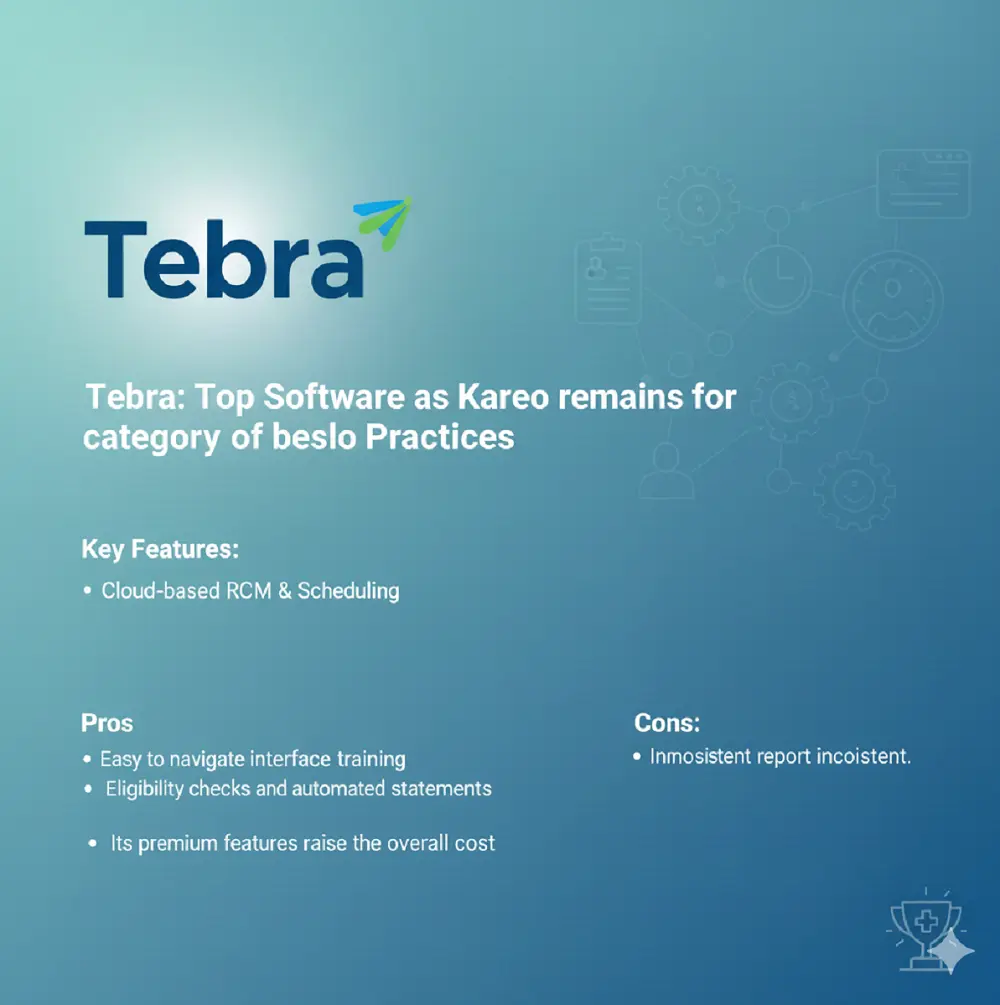
#1 Best Overall: Tebra (formerly Kareo)
Tebra, formerly known as Kareo, remains undefeated in the category of best software for solo practitioners. Tebra combines RCM, scheduling, and patient engagement into one cloud-based dashboard. A person with beginner-level tech knowledge can operate it, thus eliminating the need for an expert operator. This tool is appreciated because it is a patient payment portal that improves self-pay collection.
Pros
- Easy-to-navigate interface requiring minimal training.
- Eligibility checks and automated patient statements.
Cons
- Some users report inconsistencies.
- Its premium features raise the overall cost.
Key Feature:
With its automated denial management, Tebra supports a smoother claim submission workflow; it reduces the manual work and makes the claim process
Follow-ups are much smoother.
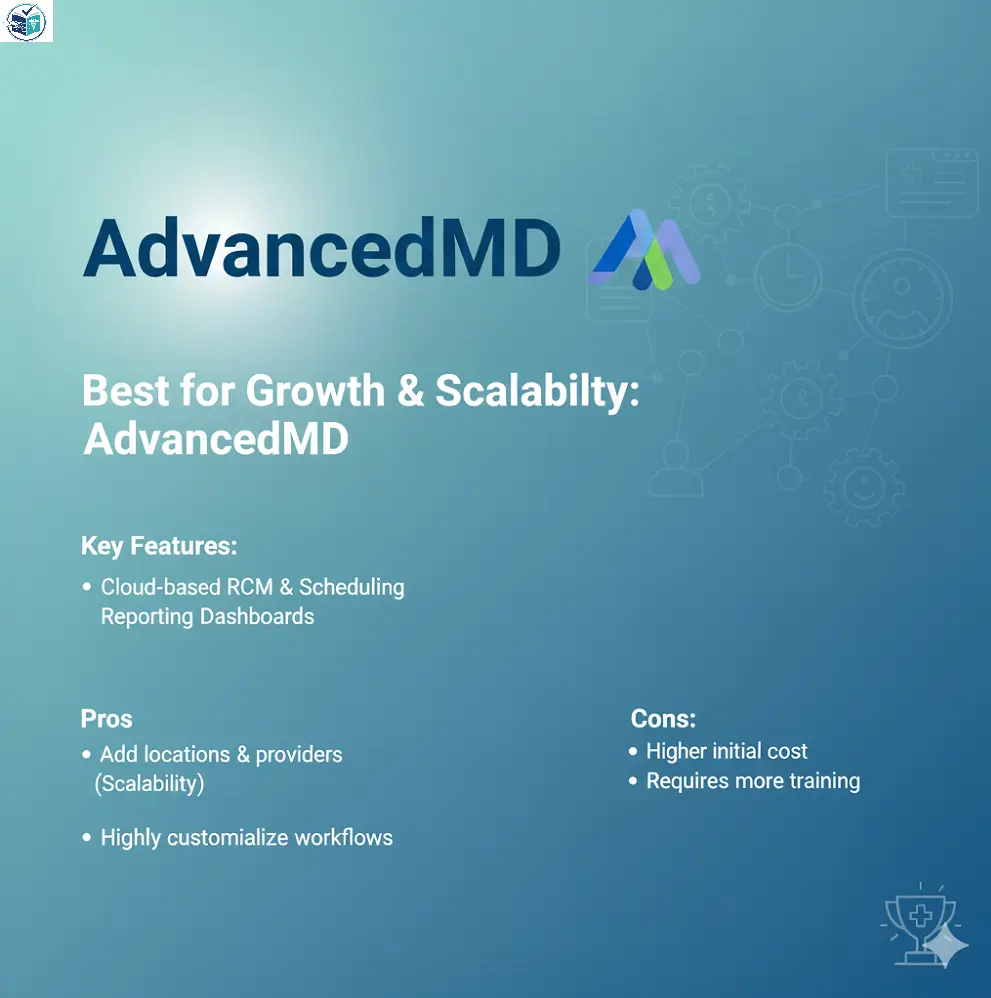
#2 Best for Growth & Scalability: AdvancedMD
AdvancedMD allows more customization than its competitors. It is built by keeping future growth in mind. AdvancedMD is ideal for small practitioners looking to scale up in the future. It offers reporting dashboards to modular add-ons for scheduling appointments.
Pros:
- Allows practices to add location and providers, playing a key role in scalability.
- Offers highly customizable workflow templates.
Cons:
- Higher initial cost as compared to other entry-level competitors.
- Requires more training, as its interface is pretty complex.
Key Feature:
It gives higher administration real-time visibility into revenue cycle performance.
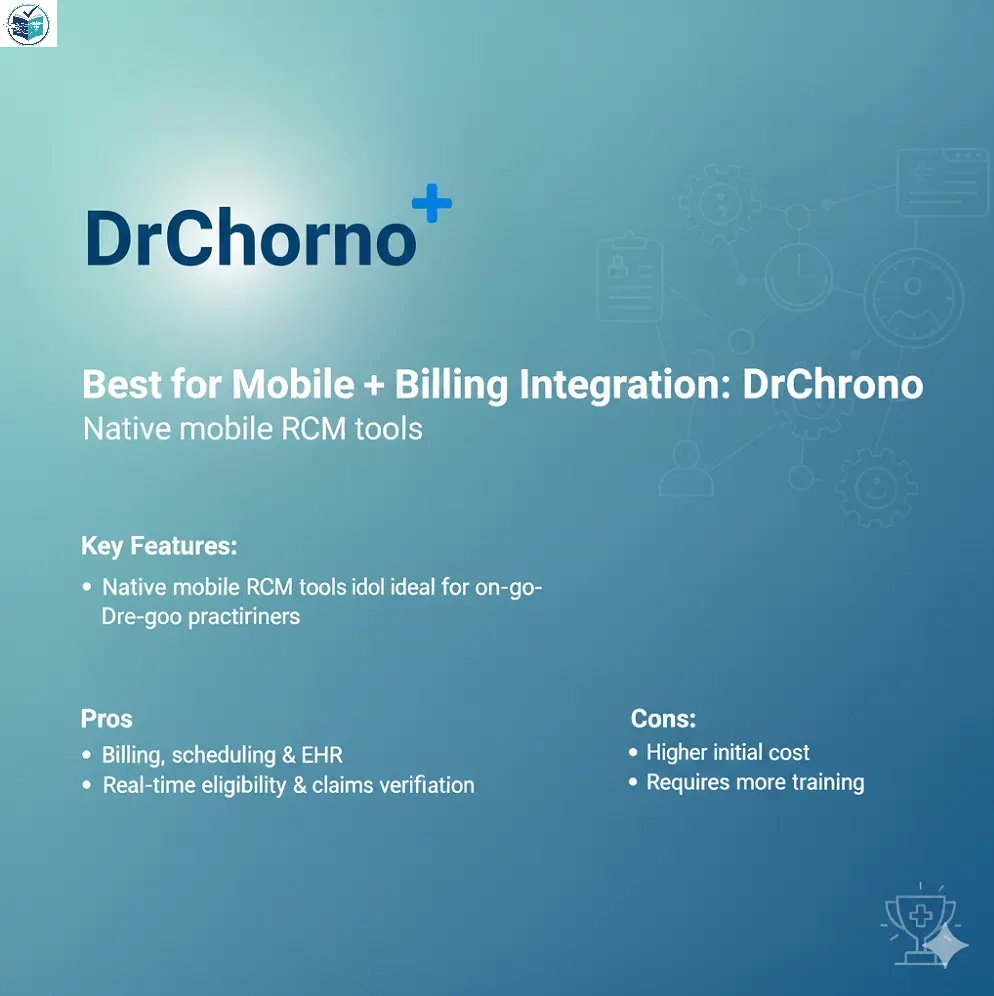
#3 Best Mobile + Billing Integration: DrChrono
DrChrono has native iOS/Android apps with key features like billing workflows. It is best known to those providers who want total mobility in managing charts and claims.
Pros:
- Billing, scheduling, and EHR are all offered in one platform.
- It offers real-time eligibility checks and claims verification.
Cons:
- Its cost is much higher than the rest of the software.
Key Feature:
Due to native mobile RCM tools, it is ideal for practitioners who are frequently on the go.
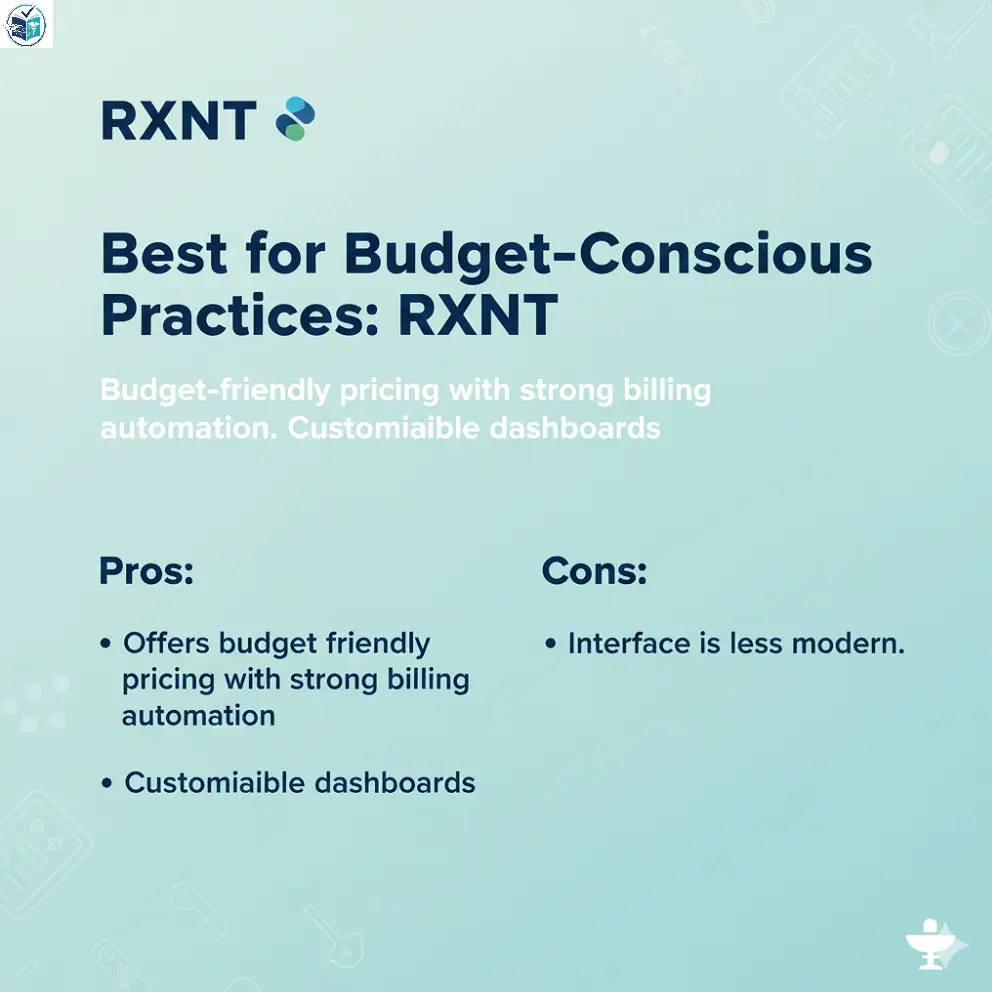
#4 Best for Budget-Conscious Practices: RXNT
Its pricing plans often start lower than its competitors. For its lower price, it doesn’t cut out the essential tools. It can be the best option for clinics that are looking for a budget-friendly option.
Pros:
- It offers budget-friendly pricing with strong billing automation.
Cons:
- The software’s interface is less interactive and modern than new competitors.
Key Feature:
RXNT offers customizable dashboards.
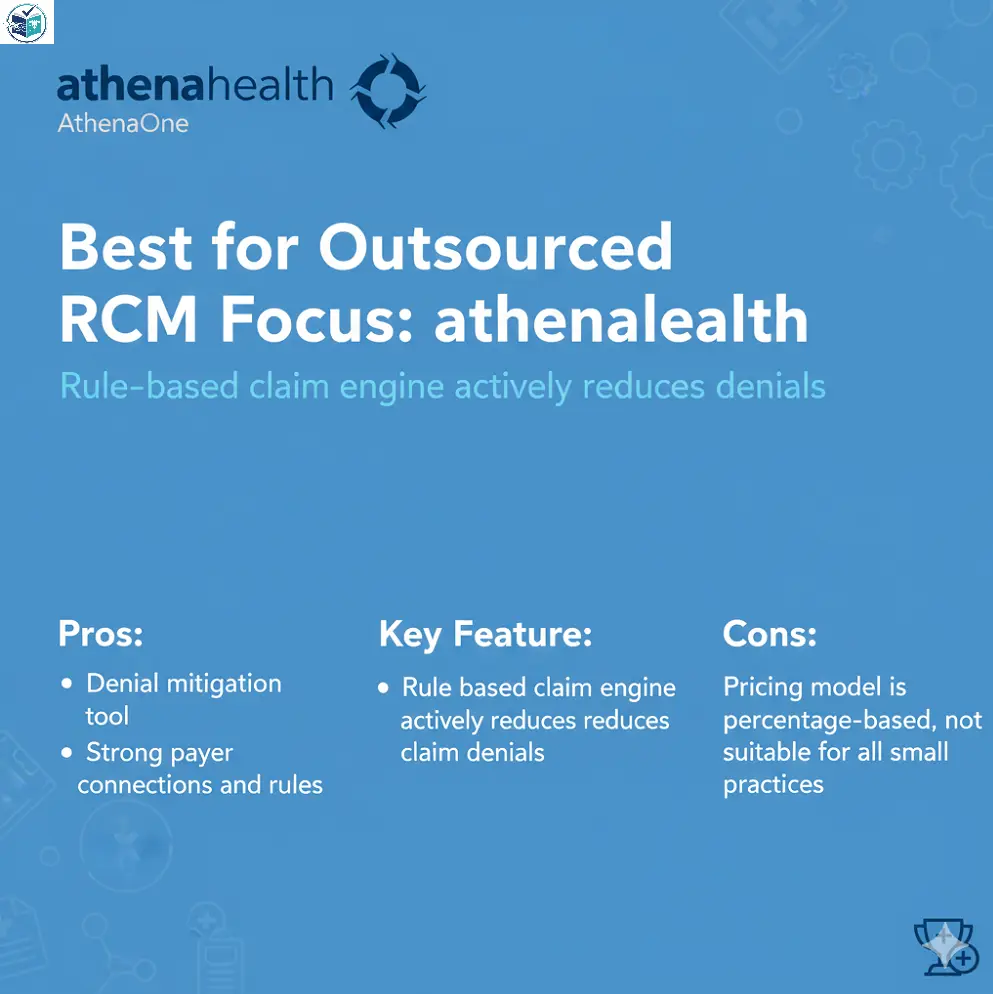
#5 Best for Outsourced RCM Focus: athenahealth (AthenaOne)
Instead of subscription models, it charges a percentage of collections from its users. If a clinic decides to get outsourced RCM support alongside software, athenahealth becomes much more attractive.
Pros:
- Denial mitigation tool.
- Strong payer connections and rules.
Cons:
- As it charges a specific percentage of revenue earned using its tools, the pricing model may not be suitable for many small practices.
Key Feature:
Its rule-based claim engine actively reduces claim denials.
#6 Best Modular Choice: PracticeSuite
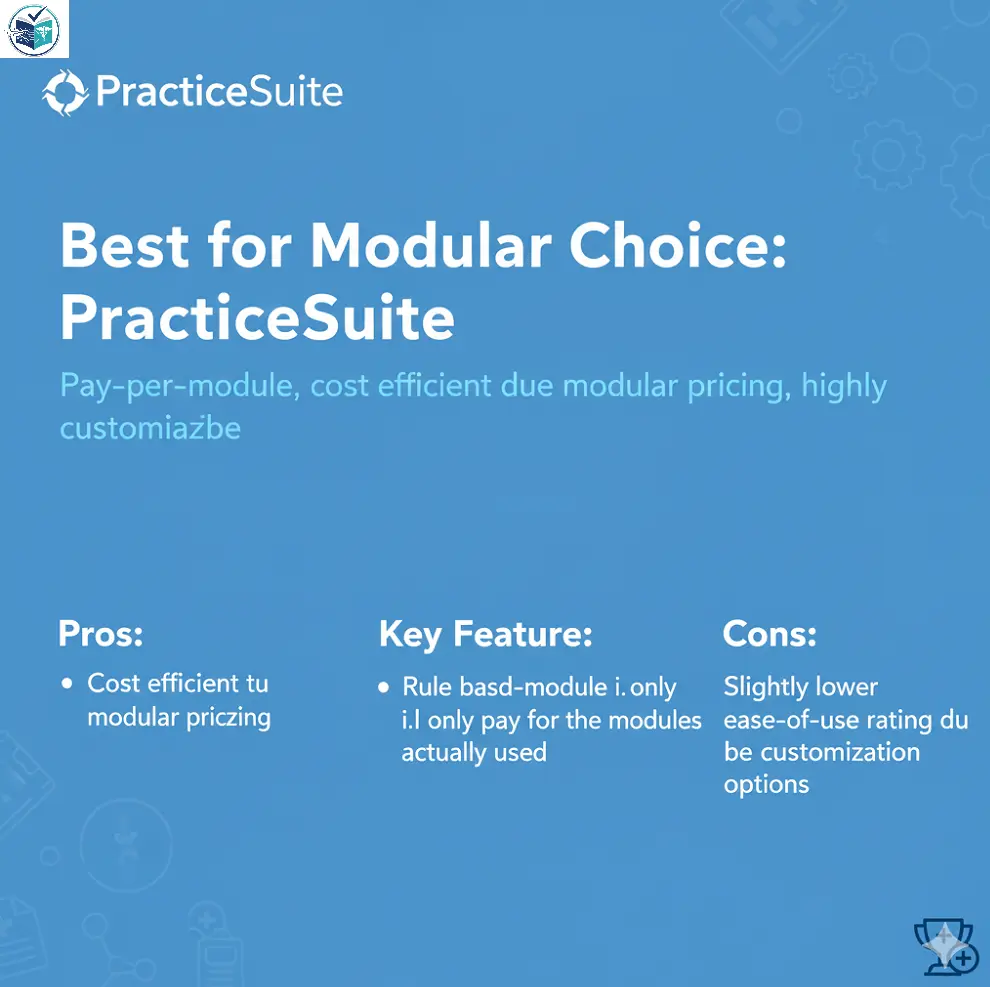
PracticeSuite allows practices to only purchase those modules that they need. Practices don’t have to buy the whole package if they don’t want to; they can move forward by just choosing the services they mainly require. This software is extremely cost-controlled and highly customizable.
Pros:
- Cost-efficient due to modular pricing.
Cons:
- Slightly lower ease-of-use rating due to customization options.
Key Feature:
Pay-per-module, i.e., only pay for the modules you actually use.
#7 Best Integrated Suite for Small Growth: NextGen Office
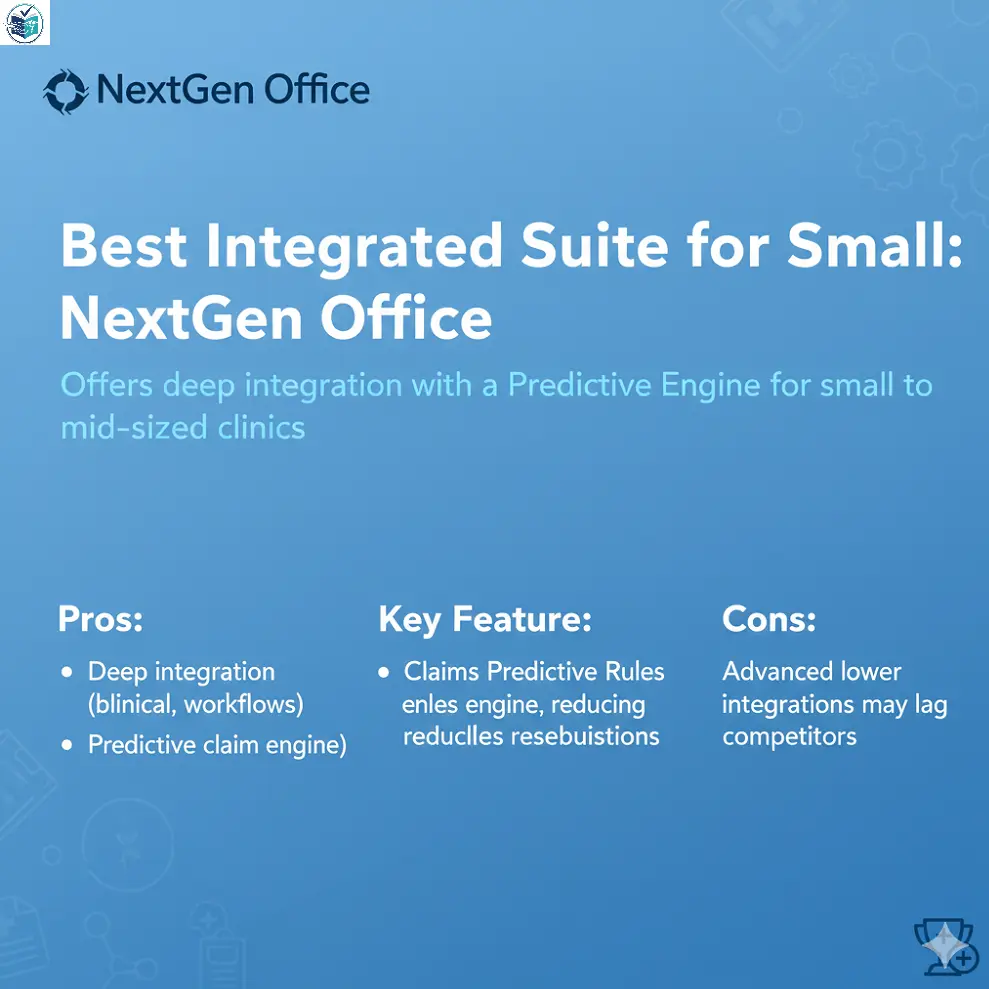
The target market of NextGen is small- to mid-sized clinics that look for integration but do not want to pay the prices that enterprises are paying.
Pros:
- Offers deep integration between billing, clinical records, and practice workflows.
- Predictive claim engine.
Cons:
- Support for advanced integrations may lag competitors.
Key Feature:
Claims the predictive rules engine reduces the chances of claims being resubmitted.
4. Key Features to Prioritize in Your Software
As we discussed earlier, when evaluating software for a solo practitioner or small practice group, the following features should be non-negotiable.
1. Real-Time Eligibility Verification
Insurance eligibility should be checked even before the patient is sent to be seen by a healthcare provider. This step reduces the time spent chasing the payer; it prevents denials at the very start.
2. Automated Claim Scrubbing & Denial Tools
Software tools flag any incorrect, mismatched, or missing information before the submission of claims.
3. Integrated Billing + EHR/PM
One platform that handles the billing, scheduling, and charging by seamless integration reduces the risk of duplicate entries, boosting accuracy and efficiency.
5. Transparent, Predictable Pricing
Software with clear monthly subscription fees is more encouraged in the industry.
6. Intuitive User Interface & Support
Solo practitioners should use software with a cleaner interface so that less time is spent on the administrative side of the business and more time is spent on taking care of the patients.
5. Final Verdict & Next Steps
Tebra tops the list of software for 2026, as many solo practitioners and small practice groups use it due to its intuitive RCM workflows and integrated practice management suites. While AdvancedMD remains the best choice for clinics that want to scale up in the near future and need deep reporting.
If you are looking for software for your organization, don’t choose solely based on feature lists. Request demos from the vendors, test workflows with your staff, and ensure the vendor offers responsive support that matches your pace.
Note: The information on denialjournal.com is provided for educational purposes only and is in no way intended to diagnose, cure, or treat any medical or other condition.
References
Ambs Call Center. (n.d.). Best EMR for small practice.
https://www.ambscallcenter.com/blog/best-emr-for-small-practice
HealthOrbit AI. (n.d.). 7 software for medical billing.
https://healthorbit.ai/blog/7-software-for-medical-billing
Medical Billing Course. (n.d.). Top medical billing software solutions: Reviews and insights.
https://www.medicalbillingcourse.com/top-medical-billing-software-solutions-reviews-insights/
Suggestron. (n.d.). Medical billing software guide: Features, benefits, and future trends.
https://suggestron.com/medical-billing-software-guide-features-benefits-top-software-future-trends/
Tebra. (n.d.). Best medical billing software for private practices.
https://www.tebra.com/theintake/getting-paid/best-medical-billing-software-private-practices/

Laim Will
Lead Revenue Cycle & Compliance AnalystSpecializing in medical billing workflows, claim denial resolutions, and CMS coding compliance.